Sigma 24105mm F4 Dg Os Hsm Art Lens for Canon Ef Specs
Sigma 24-105mm f/4.0 DG Bone HSM Fine art Lens Review

Your general purpose lens option curt list but got one lens longer. The Sigma 24-105mm f/iv.0 DG Os HSM Art Lens, featuring great image quality, excellent build quality and optical stabilization, definitely deserves your consideration. This lens is a pleasance to use, it looks smashing and the results from it await fifty-fifty better.
Sigma makes a broad multifariousness of lenses, but until at present, has been missing a stabilized full-frame format full general purpose lens. Every bit such, the 24-105mm f/4 Bone lens addition to the Sigma lineup is completely welcomed by me.
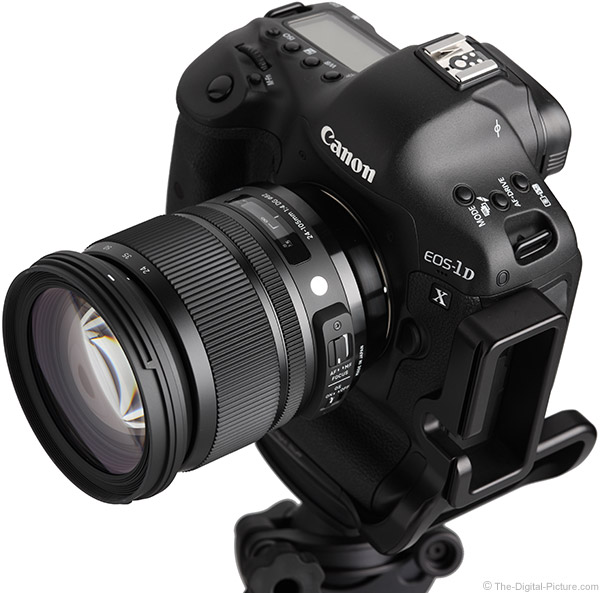
Focal Length
Past (my) definition, a general purpose lens is one that will cover a very wide range of typical photography subjects. This lens type is normally the first I tell people to get with their outset DSLR camera. The focal length range is the biggest factor in my considering a lens to autumn in the general purpose lens category. For those of you using a full frame format sensor, the 24-105mm focal length range found in this lens will supersede my recommended general purpose lens focal length range by a very comfortable margin on the long terminate.
Hither is a pair of examples showing what this focal length range looks like:

The get-go set of examples utilizes the printed-on-the-lens focal lengths. For the 2nd fix, I attempted to hit 28mm (I estimated slightly long) and omitted 80mm every bit it is relatively shut to 70mm. The 24-70mm focal length range is a very common one. The comparison in a higher place shows the specific advantage of having upwards to 105mm available.
Those on the APS-C (1.6x FOVCF) format will see an bending of view equivalent to 38.4-168mm on a full frame DSLR. This range is somewhat lacking from a wide angle perspective, but it has a very bonny long terminate. If your focal length needs gravitate toward the long finish, a 24-105mm lens will be very useful to yous.
Every bit I said, by definition, a general purpose lens has a very wide range of uses. 1 of my favorite such uses is for mural photography. It is not hard to compose excellent 24mm landscape images that evoke a sense of presence and at 105mm, information technology is even easier to find attractive landscape compositions.
People are of course hugely-popular general purpose lens subjects, and with the focal lengths upwardly to 105mm included, this lens allows bully perspective for even relatively tightly framed portraits. Zoom out to 24mm and capture the unabridged group and/or the environment your discipline is in.

The number of other uses for this lens is as vast equally your imagination. Products, cars/trucks/boats/bikes, art, cities, beaches, mountains, sports (all-time-suited for outdoor sports), parties, pets and much more than.

Aperture
In the Sigma press release, "Amir-Hamzeh added that this new lens combines the largest possible fixed aperture to zoom ratio that will maintain optimal integrity ..." Interesting is that, until now, the Sigma line has been completely void of fixed f/4 max aperture zoom lenses. An f/four aperture is big, just f/4 allows ane/2 as much light to attain the sensor (one finish darker) equally the f/ii.8 zooms allow. But you lot will non find any 24-to-something zoom lenses reaching longer than 70mm with an f/two.8 aperture bachelor.
If shooting activeness in low lite, I'm going to desire one of the f/2.8 variants that volition let me to use a shutter speed that is twice as fast. If shooting the night sky, I prefer f/two.8 (the earth is in action). You lot of course demand to decide if f/four is wide enough for your needs.
I tin tell you that the prototype quality from this lens is indeed, as Amir-Hamzeh mentioned, "optimal" (much more to come up). And peachy is that you accept the max f/4 discontinuity available at all focal lengths. Unlike with a variable max discontinuity lens (an f/four-5.6 lens for example), you can set up a wide open aperture exposure that remains abiding over the full zoom range.
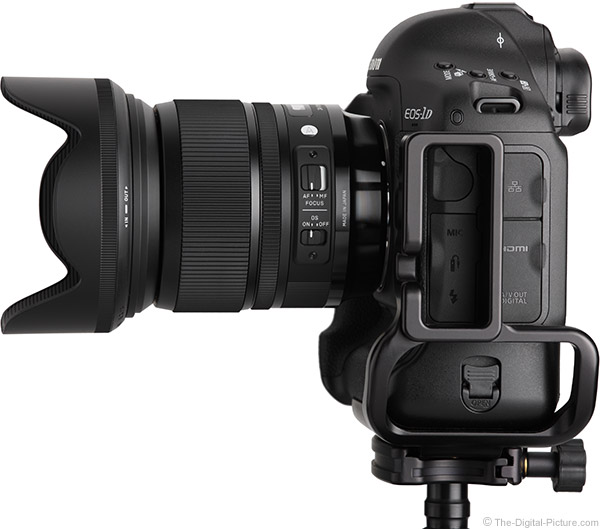
Optical Stabilization
Adding greatly to the usefulness of this lens is optical stabilization. Bone makes a huge difference when handholding this lens – delivering both sharper results at long shutter speeds and improve-framed results thanks to a stabilized viewfinder.
Great for video recording is that this OS implementation is practically silent. Unique to this Bone implementation is that it is always agile if the camera is powered on and the Bone switch is in the on position. And, I can hear the very faint OS noise even when Os is switched off. The divergence in long exposure handheld paradigm quality is vastly different with OS switched off, just the OS system is always running. I've never worried about battery drain when using stabilization (including with this lens), but I expect that always-on stabilization uses some additional power.
At 24mm, my keeper rate was nearly 100% with a .3 2nd exposure which is about iii stops of assistance for me. About 60% of my images were sharp at .4 seconds, but my keeper rate dropped quickly beyond this exposure time.
At 105mm, I am getting mostly sharp results at ane/10 second with very gradual drop-off until just fewer than 50% of my images were sharp at 1/5 second. The keeper rate then plummets as the exposure duration increases. Virtually 75% of images remain sharp at the approximately 4-finish of aid one/6 sec shutter speed.
These tests were done under ideal weather. If you run up a mountain and have a shot under high current of air atmospheric condition, I can clinch you that your .3 second exposure is non going to be sharp. Just IS is nonetheless going to exist benign in this state of affairs. It is just that the benefit is shifted to shorter exposures.
Got ideal weather? Shoot a lot of frames and you lot will likely capture a abrupt image (you probably only need one) at even longer exposures than I'thousand talking about here. Below is a modestly-sharpened example of a .3 second 105mm handheld capture.

I'yard certain you agree that the difference betwixt these two images is quite noticeable. OS works. Unless the subject area is moving. A shorter exposure is needed to cease subject motion.
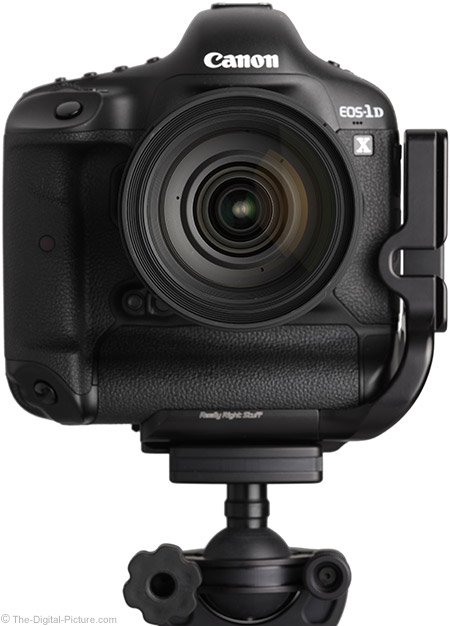
Image Quality
Since a general purpose lens is often the about-used lens in the kit, and since the lens can exist as of import (or more than important) than the camera, it makes complete sense to get a high functioning general purpose lens model. And in the performance category, paradigm quality is my most-cared-nearly feature. Great news is that the Sigma 24-105mm f/4.0 DG Bone HSM Fine art Lens performs extremely well and delivers peculiarly-abrupt images.
At 24mm through 35mm, this lens is very sharp beyond the frame with some pocket-size full frame corner improvement showing at f/5.half-dozen. Using a ane or two stop narrower-than-max aperture ordinarily delivers improve image sharpness, but the but reason to stop this lens down to f/8 in the 24-35mm range is for increased depth of field or a longer exposure.
Though still quite sharp at 50mm, I tin can come across a very slight reject in broad open up aperture image sharpness beyond the frame. Stopping down to f/5.six results in a very slightly sharper center of the frame and a more-noticeable improvement in corner sharpness. Sharpness at 70mm is very like to sharpness at 50mm, though the corners testify more clean-up continuing at f/8. Notwithstanding, image quality in the 50-70mm range is very skilful – only bested slightly by the 24-35mm results.
At 105mm, broad open aperture image sharpness takes a more than noticeable decline. The across-the-frame improvement at f/5.6 is strong with corners showing slight improvement at f/viii. While 105mm f/4 is usable, f/5.half dozen volition make you smile large.
Especially affecting 105mm epitome quality is relatively strong CA (Chromatic Aberration). Near zoom lenses exhibit some CA toward the border of their image circle at both extents of the focal length range and this is the case with the 24-105 OS. The overall amount of CA is not unusual, just CA at 105mm is slightly more noticeable than at 24mm. Hither is a 105mm worst-case instance:

CA is 1 of the most easily software-correctable lens flaws.
Using a lens with a full frame image circle on an APS-C body typically results in no noticeable light falloff in the frame corners even at wide open up apertures and this is the case with the Sigma 24-105. Total frame camera owners will, as usual, encounter light falloff when using this lens at wide apertures and nevertheless slightly at narrower apertures at the widest angle focal lengths. To be more specific, at f/4, expect almost 3 stops of vignetting in the corners at 24mm and almost 2.v stops at 105mm. The least amount of light falloff occurs at approximately 35mm where a just-visible 1 stop of shading is seen in f/4 corners. At f/5.half dozen, corner shading drops under 1 stop over near of the focal length range except at 24mm where ane.2 stops of corner shading remains visible even at f/xi.
Two days prior to my initial lens loan return deadline, the skies finally cleared for a flare examination. And I'm glad that I got this test opportunity because, while not flare-gratuitous, this lens performs very well with a bright light source in the frame. The sunday in the case of this exam.
You tin can count on a 24-something mm total frame zoom lens to evangelize barrel distortion on the wide finish and pincushion baloney at the long terminate. And the Sigma holds to this tradition. At 24mm, you are going to come across moderately-strong barrel distortion – the centre of the frame bulges outward. Zooming to a longer focal length changes the baloney to the pincushion blazon – with the sides pinching in toward the center. At 28mm, baloney is negligible, simply moderately potent pincushion sets in soon after.
Following is a comparison of the 24-105's distortion at 24mm vs. 28mm. While distortion will not be recognizable in many scenes, a straight line almost the edge of the frame will make information technology clear. Baloney also makes it difficult to guess when the camera is perfectly level – something I am challenged to exercise without optical complications.

Zooming out slightly to 28mm makes a large difference in the squareness of the results. Distortion can of course exist corrected in software, but this correction is destructive at the pixel level. Once again, this lens performs normally in regards to distortion.
The Sigma 24-105 Os has a ix-rounded-blade aperture. As a generalization, the more aperture blades the improve, but bract count is non a sole differentiator in defocused image quality. More aperture blades tend to evangelize more-rounded out-of-focus highlights with a stopped-downwards aperture (as do rounded blades). Significant to some will be that a lens' discontinuity has an odd or fifty-fifty blade count. An fifty-fifty blade count in a significantly stopped-down aperture volition plow point light sources into stars with the aforementioned number of points as discontinuity blades. Odd blade count apertures will deliver twice as many star points as blades – 18 points in this case. Here is an example:

I'm not sure if I like odd or fifty-fifty bract counts ameliorate, but more than important is the quality of the foreground and background blur. And in this regard, the Sigma performs nicely. Specular highlights will show some bright borders and a couple of concentric circles inside, only they are nicely rounded even when stopped down and the circles centers are rather smooth.

Below is a crop from well-nigh the superlative left corner of a Catechism EOS 5D Mark III-captured image. Those are stars and stars are supposed to be round. Nigh lenses do not deliver round stars in the frame corners due to coma and the Sigma is again normal in this regard.

Overall, I didn't find any below boilerplate Sigma 24-105mm f/4.0 DG Bone HSM Art Lens image quality attributes, and the much-better-than-average image sharpness this lens delivers is going to outcome a lot of these lenses sold.

Focusing
The Sigma 24-105mm f/iv.0 DG OS HSM Art Lens features Sigma'southward HSM (Hypersonic Motor) focusing system. This item HSM implementation is silent during apply. Focus speed is reasonable, but not quite as fast as the Canon equivalent I am used to.
Especially important is that AF accuracy has been good. In one-shot mode, about of my images have been properly focused. I idea that the focus speed would exist an issue with action photography, but I was pleased with the good AI Servo AF operation I encountered. This lens does not have the all-time-bachelor AF system for action sports, but unless the subject was very shut, my results were mostly in-focus. Overall AF performance is quite adequate.
This lens is uniform with the Sigma USB Dock. The USB dock allows the lens' firmware to be updated (bug fixes, compatibility updates, etc.) and allows precise focus scale.
FTM (Total Time Manual) focusing is enabled and the lens does not change size with focusing (internal focusing). Some subject area size alter is noticed with focusing.
This lens is not parfocal. If you modify the focal length, refocus.
The manual focusing ring is very smooth with an ideal amount of rotational resistance. The ninety° rotation is adequate for fine-focusing needs.
The Sigma's 17.vii" (450mm) MFD (Minimum Focusing Distance) delivers a 0.22x MM (Maximum Magnification). A .22x MM is a reasonable value and is in line with the other lenses in and almost this class.
| Model | MFD | MM | |
| Canon EF 24-70mm f/iv L IS USM Lens | 7.9" | (200mm) | 0.70x |
| Canon EF 24-105mm f/4 L IS USM Lens | 17.7" | (450mm) | 0.23x |
| Sigma 24-105mm f/4.0 DG Os HSM Art Lens | 17.7" | (450mm) | 0.22x |
| Nikon 24-120mm f/4G AF-S VR Lens | 17.7" | (450mm) | 0.24x |
| Nikon 24-70mm f/2.8G AF-S Lens | 14.4" | (366mm) | 0.27x |
| Catechism EF 24-70mm f/2.8 L Ii USM Lens | 15.0" | (380mm) | 0.21x |
| Sigma 24-70mm f/two.8 EX DG HSM Lens | 15.0" | (380mm) | 0.19x |
| Tamron 24-70mm f/2.eight Di VC USD Lens | 15.0" | (380mm) | 0.20x |
No one is going to confuse 0.22x for a macro lens, but modestly-small subjects are fine targets for this magnification.

Build Quality & Features
I've had all of Sigma's Global Vision lenses bachelor as of this review appointment and can tell yous that I love the look and feel of all of these lenses. From the classy end to the sharply ribbed safety rings that feel bang-up to the smooth overall dimensions (except the raised switch area in this lens), these lenses accept great design quality.

Like all of the other lenses in its class, the Sigma 24-105 Bone extends when zooming to a longer focal length. The length of this extension is one.86" (47.3mm). This lens features a double-extending lens butt, just the extension remains solid fifty-fifty when fully extended. The zoom and focus rings are also solid – and very smooth. The switches are house and snap into position – yous are not probable to inadvertently alter one of these.

I know. Y'all saw that the focus ring is behind the zoom ring and thought to yourself, "Oh no, Bryan is going to mutter about that." Well, I don't want to allow you downwards. I still like rear-positioned zoom rings and front end-positioned focus rings best. The camera and lens balance signal is at the rear of this lens. That means that my pollex and first finger goes into the nicely rounded rear section of the lens and from that hold position, I reach forward to the zoom ring. And that means that the focus band is in the middle, available for adventitious rotation.
I desire at that place to be no chance that I unintentionally rotate the focus band after focus is caused. However, this position is non such a big deal for this lens. Partly because this focus ring is rather narrow, partly because the zoom ring is raised and partly because the zoom ring rotation resistance is house.
When I accomplish forward, the large, raised zoom ring is very easy to detect. This band is solid and very smooth with merely the right amount of resistance. No zoom extension lock switch is provided. Though I encountered some opposite gravity zooming when shooting with the lens extended and directed direct upward, I take not encountered whatsoever typical gravity zooming. Even when shaking the lens. I tin't predict what will happen subsequently a long period of utilize, merely ... the lens is peachy as-is.
Note that the zoom and focus rings rotate in the Canon management – opposite that of Nikon lenses.
The aforementioned reasons that go along the focus ring out of the fashion also make it harder to employ. Beingness small with ribbing roofing simply a portion of it, the focus ring is not nearly equally easy to find and use as the zoom ring. Particularly in the nighttime. And especially with gloves on.
The weight of this lens is noticeable, just non excessive. It is a flake heavier than the other f/4 lenses in its grade and all the same slightly heavier than most 24-lxx f/2.viii lenses. The size of this lens is very similar to the other lenses included in the chart below.
| Model | Weight | Dimensions w/o Hood | Filter | Year | ||
| Catechism EF 24-70mm f/4 Fifty IS USM Lens | 21.2 oz | (600g) | 3.three 10 3.vii" | (83.iv x 93mm) | 77mm | 2012 |
| Canon EF 24-105mm f/4 Fifty IS USM Lens | 23.7 oz | (670g) | 3.3 x four.2" | (83.5 10 107mm) | 77mm | 2005 |
| Sigma 24-105mm f/four.0 DG Bone HSM Art Lens | 31.two oz | (885g) | 3.5 x 4.three" | (88.6 ten 109.4mm ) | 82mm | 2013 |
| Nikon 24-120mm f/4G AF-S VR Lens | 23.7 oz | (670g) | 3.3 ten four.1" | (84 ten 103mm) | 77mm | 2010 |
| Canon EF 24-70mm f/2.8 50 Two USM Lens | 28.4 oz | (805g) | iii.5 x 4.iv" | (88.v x 113mm) | 82mm | 2012 |
| Nikon 24-70mm f/ii.8G AF-S Lens | 31.8 oz | (900g) | 3.3 x 5.2" | (83.82 x 132.08mm) | 77mm | 2007 |
| Sigma 24-70mm f/ii.8 EX DG HSM Lens | 27.9 oz | (790g) | 3.4 x three.7" | (86.half dozen ten 94.7mm) | 82mm | 2011 |
| Tamron 24-70mm f/two.viii Di VC USD Lens | 29.1 oz | (825g) | three.5 x iv.3" | (88.2 x 108.5mm) | 82mm | 2012 |
For many more comparisons, review the consummate Sigma 24-105mm f/4.0 DG OS HSM Fine art Lens Specifications using the site'south Lens Spec tool.
When you lot pick upwards this lens, it has enough size and mass to feel substantial, just not that much to become burdensome. I've carried this lens for long periods of time with no remorse for having washed so. Especially after seeing my images later.
Note that this is not a weather sealed lens.
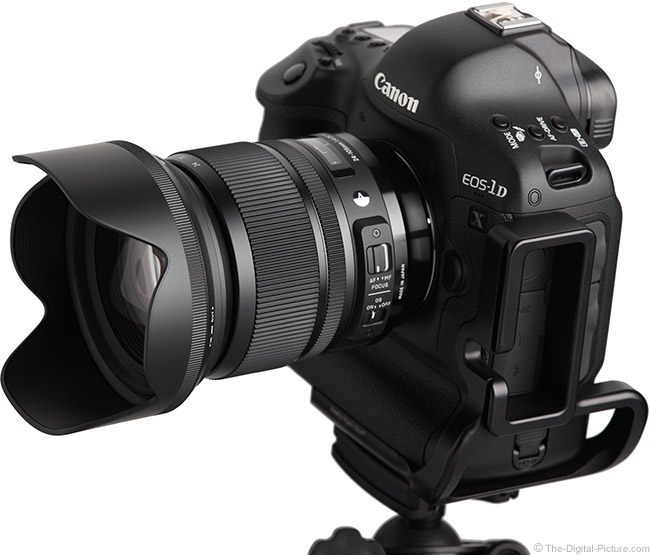
As with all Sigma lenses, the lens hood is included in the box. The rear of this modestly-sized hood has a rubberized surface that, in add-on to the molded-in ribbing, makes it easy to grasp for bayonet installation/removal. I seldom accept this hood off or fifty-fifty reverse it. Having the hood in set up-to-utilize position makes using the lens faster to utilise – which is specially helpful for a lens that I leave on the camera ready for quick use around the house or from the pocketbook. My bag for this lens has been the Lowepro Toploader 70 AW. It provides only the right amount of room for a DSLR mounted to the 24-105 Os with the hood in gear up-to-use position. I ofttimes forgo lens cap apply when casing in this mode, making the kit even faster to utilise.

Sigma includes their padded, zippered nylon instance with this lens. The case is quite protective and a nice included accessory. A 1.75" (440mm) loop is provided for belt attachment. I personally prefer the Sigma cases to the minimally protective Canon lens pouches.
Sigma recently improved their lens cap pattern, making them easier to grasp for installation or removal fifty-fifty inside the installed hood.
The 82mm filter threads this lens has received are becoming increasingly common. Have note that using a standard thickness round polarizer filter will increase light falloff in frame corners. I highly recommend using a slim model such as the B+West XS-Pro.

All Global Vision lenses receive a designation of "A" for Art, "C" for Contemporary or "S" for Sports. As I said earlier, I love what Sigma is doing with their lenses right now, merely I'm non all the same a fan of potentially limiting the usefulness of a lens to i of these categories. And, I was non sure why this lens received an "A" (vs. a "C" perhaps?). I posed this question to Sigma with the response existence "The 24-105 was placed in the Art line because it fits the criteria all-time- large stock-still aperture designed for a more artistic vision." I'1000 more of the opinion that an f/iv aperture is medium wide, just information technology is indeed fixed. The excellent prototype quality this lens delivers will indeed heighten your creative expression.
Hither is a look at the Sigma 24-105 OS positioned between three other f/4 zoom lenses.
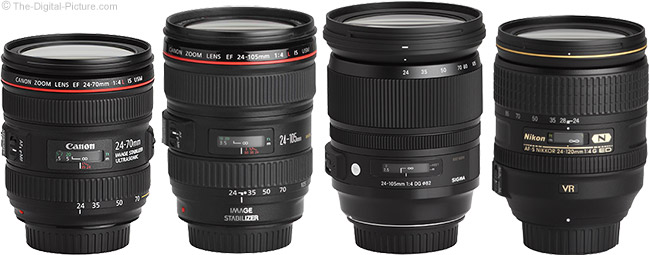
The above lenses are, from left to right, in their fully retracted positions, the following:
Canon EF 24-70mm f/four Fifty IS USM Lens
Canon EF 24-105mm f/iv L IS USM Lens
Sigma 24-105mm f/four.0 DG OS HSM Fine art Lens
Nikon 24-120mm f/4G AF-S VR Lens
The aforementioned lenses are shown below in their fully extended states with their lens hoods in identify.

While all of these lenses (and the f/2.8 zooms as well) tin can exist compared both optically and physically in the site's comparison tools, the Catechism 24-105 Fifty IS has been my most-used Canon lens to engagement. And this is the lens I really wanted to compare to the Sigma.
Compared to the Canon EF 24-105mm f/4 50 IS USM Lens
The Sigma enters life with a large challenge on the Canon side of the argue. Canon'southward focal length range and max aperture equivalent lens has been a long-time favorite that delivers bang-up overall performance at a reasonable toll. The lesser line is that I could exist very happy with either of these lenses as my sole general purpose zoom and that they are more similar than different.
From a broad open up aperture sharpness perspective, the Sigma performs better in the mid and peripheral areas of the image circumvolve at 24mm through 28mm. The two lenses are nearly equivalent from 35mm through 70mm. The Canon is sharper at 105mm. When using a zoom lens, many of us tend to use the ii focal length extremes the near. Sigma wins the 24mm competition and Catechism wins at 105mm.
But that's at f/four. Stop down to f/5.six, and you'll exist hard pressed to detect a difference in sharpness betwixt these lenses.
The Sigma has slightly more light falloff at long end only shows less flare. The Canon has less pincushion baloney in the mid focal lengths.
The Sigma focuses more quietly than the Catechism, but the Canon focuses a flake faster than the Sigma. The Canon has a larger and improve-positioned focus ring with more than rotation (122° vs. xc°). The Canon uses smaller filters (77mm vs. 82mm), but the reward should go to the size that is already in your kit. The Canon lens is lighter and slightly smaller – and is weather sealed.
Then, the Sigma presents a strong challenge to this Canon lens. Price is probably going to make the deviation to many.
Cost
Cost, for about of us, matters. And the good news is that the Sigma 24-105mm f/four.0 DG OS HSM Fine art Lens has a small price tag – specially for what you lot get. If you lot compare this lens' toll to the price of the Canon 24-105 L, it looks similar a very good bargain. If you compare the cost of this lens to the frequently-been-bachelor white box version of the 24-105 50 (a lens pulled from a camera and lens kit), the Sigma's toll is not such an advantage.
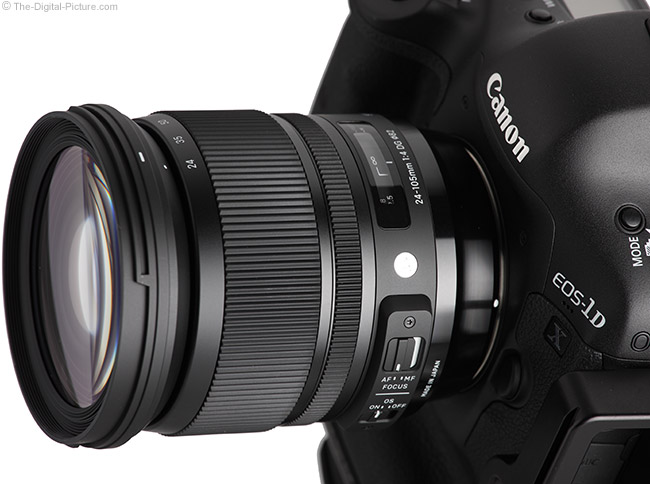
The reviewed Sigma 24-105mm f/4.0 DG Os HSM Art Lens was loaned to me by Sigma. I usually buy my review lenses online/retail, just Sigma made a production version of this lens available to me before this lens hit retailer warehouses. So I accepted their offer.
The Sigma 24-105mm f/4.0 DG OS HSM Art Lens is bachelor in Canon (reviewed), Nikon and Sony/Minolta. My standard disclaimer: In that location are potential issues with third party lenses. Since Sigma reverse engineers (vs. licenses) manufacturer AF algorithms, at that place is always the possibility that a DSLR body might not back up a (likely older) third party lens. Sometimes a lens can be made uniform by the manufacturer, sometimes non. There is also the adventure of a problem that results in the lens and body manufacturers directing blame at each other. Compatibility with the Sigma USB Dock is risk reducing as Sigma tin can release firmware updates for the lens. Sigma USA's iv-year warranty is superior to Canon'due south standard 1 yr warranty (Sigma's international warranty is besides 1 year).
Worth noting is that, as a Global Vision lens, the 24-105 Bone qualifies for the Sigma Mount Conversion service. For a fee, Sigma will catechumen your 24-105 Bone to a dissimilar manufacturer mount (from Nikon to Canon for instance) to protect your investment.

I've tested a lot of lenses that made me anxious to motility on. This is not i of them. I would accept no problem making this my chief general purpose lens.

The Sigma 24-105mm f/4.0 DG Os HSM Fine art Lens' long focal length range will take a broad swath out of your angle of view needs. This great-looking lens is a joy to use and the results from it are even heady to view. For a reasonable price, the Sigma 24-105mm f/4.0 DG OS HSM Art Lens reliably delivers the fantabulous prototype quality yous are looking for from your DSLR camera.
Bringing you this site is my full-time job (typically 60-80 hours per calendar week). Thus, I depend solely on the commissions received from you using the links on this site to make any purchase. I am grateful for your support! - Bryan
My Recommended Sigma 24-105mm f/4.0 DG Bone HSM Art Lens Retailers
Hire the Sigma 24-105mm f/iv.0 DG Os HSM Art Lens
The Tip Jar
More than Sigma 24-105mm f/4.0 DG OS HSM Art Lens Related Information
Bryan Recommends Buying Information technology Here
lambertprighorky1989.blogspot.com
Source: https://www.the-digital-picture.com/Reviews/Sigma-24-105mm-f-4.0-DG-OS-HSM-Art-Lens.aspx
0 Response to "Sigma 24105mm F4 Dg Os Hsm Art Lens for Canon Ef Specs"
Post a Comment